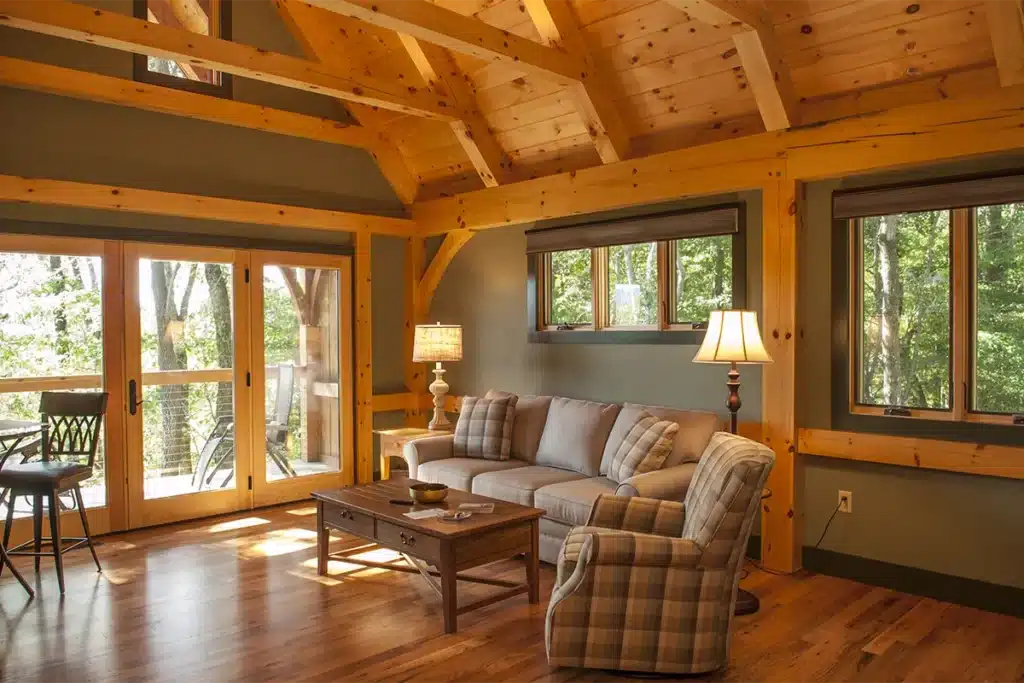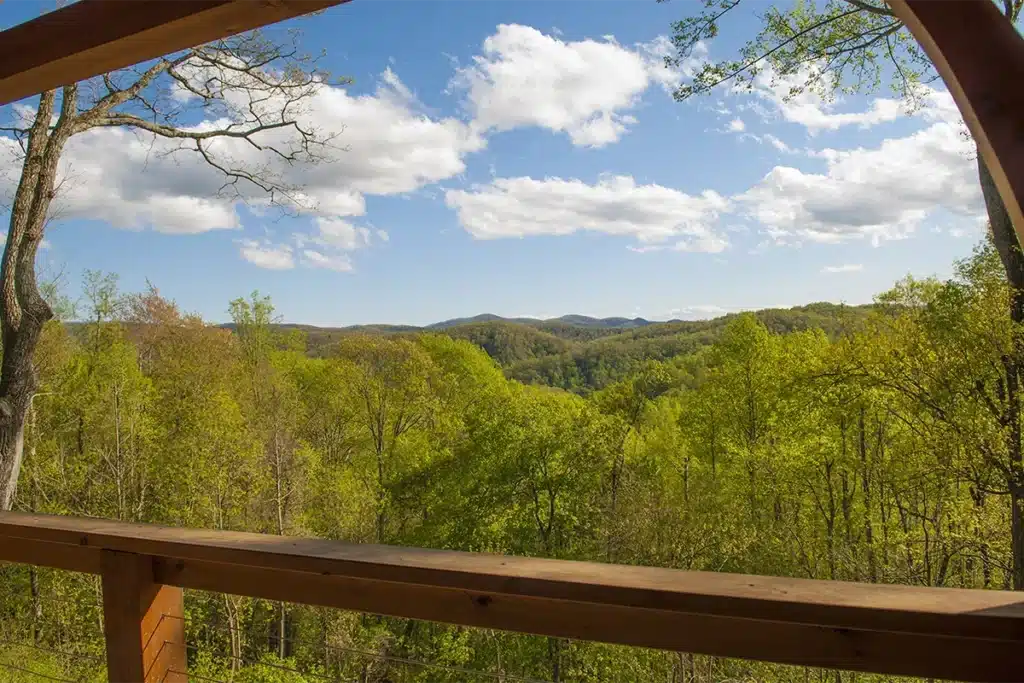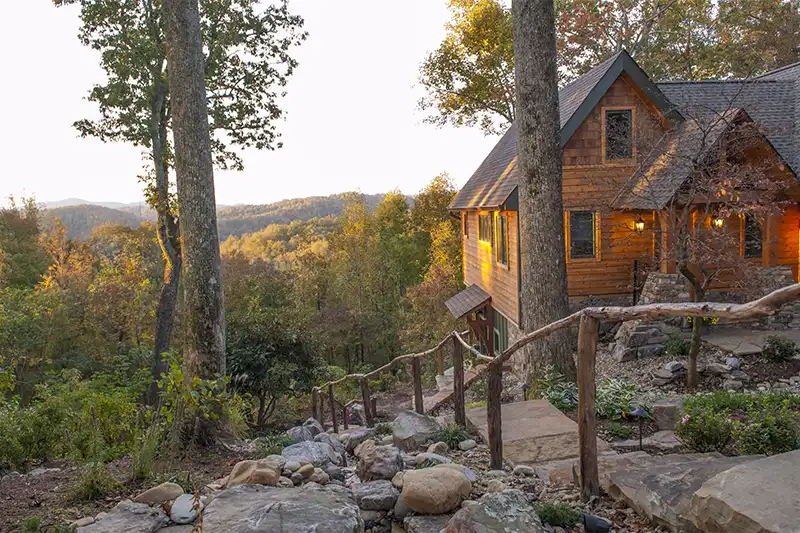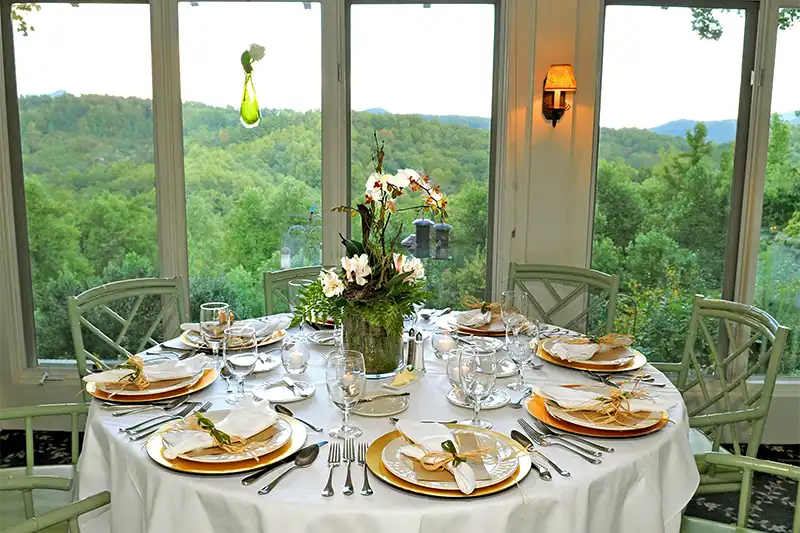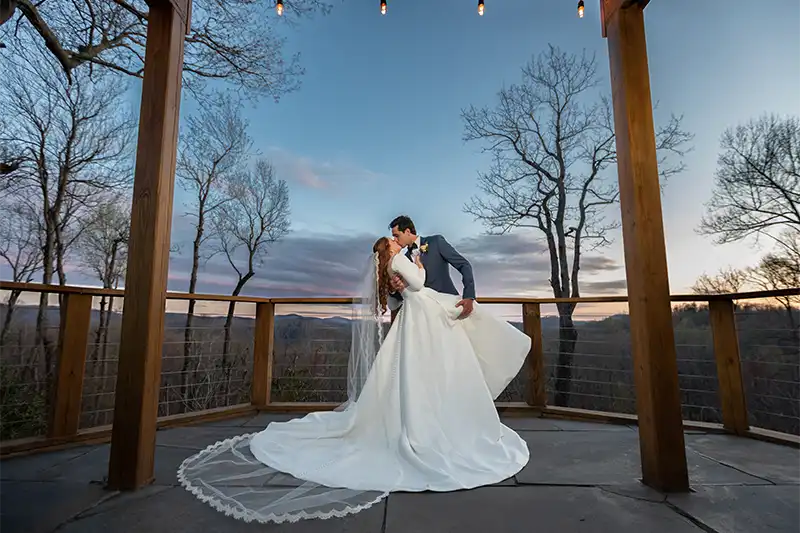

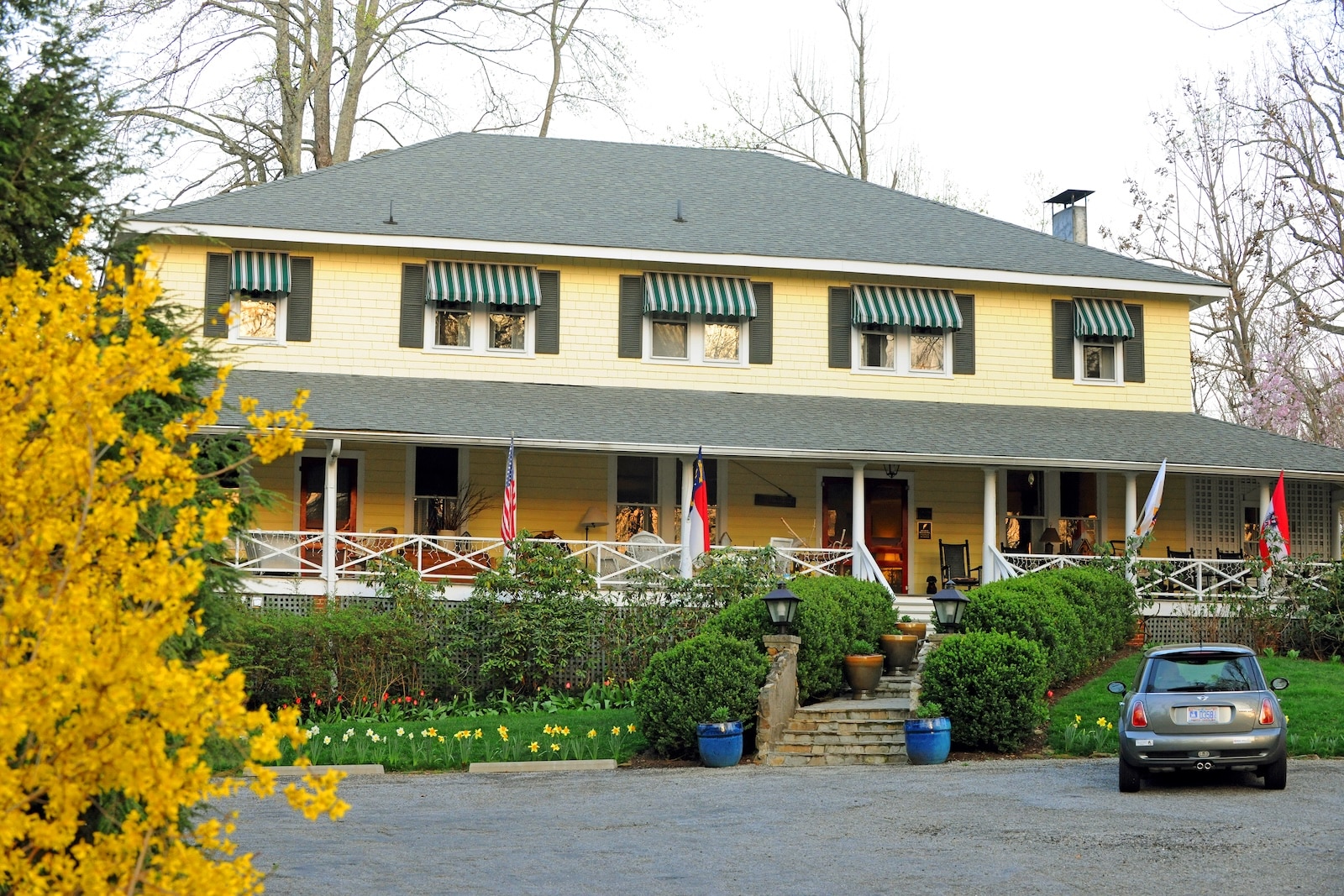
Long before our Saluda Bed and Breakfast welcomed guests looking for a mountain escape, this property was already tied to Saluda’s railroad era. Built in 1926 by the Brotherhood of Railway Clerks of the Southern Railway System, it was originally known as the Railway Clerks’ Mountain Home, a summer retreat for railroad clerks and their families.
That history connects us directly to the railroad that helped build Saluda: the Saluda Grade.
What Is the Saluda Grade?
The Saluda Grade is a roughly three-mile section of railroad between Melrose and Saluda, North Carolina, and it is recognized as the steepest standard-gauge mainline railroad grade in the United States.
The grade averages about 4.7%, with short sections approaching 5%, and gains roughly 600 feet over its steepest stretch. By railroad standards, where even a 1% to 2% grade can significantly affect operations, the Saluda Grade was exceptionally difficult.
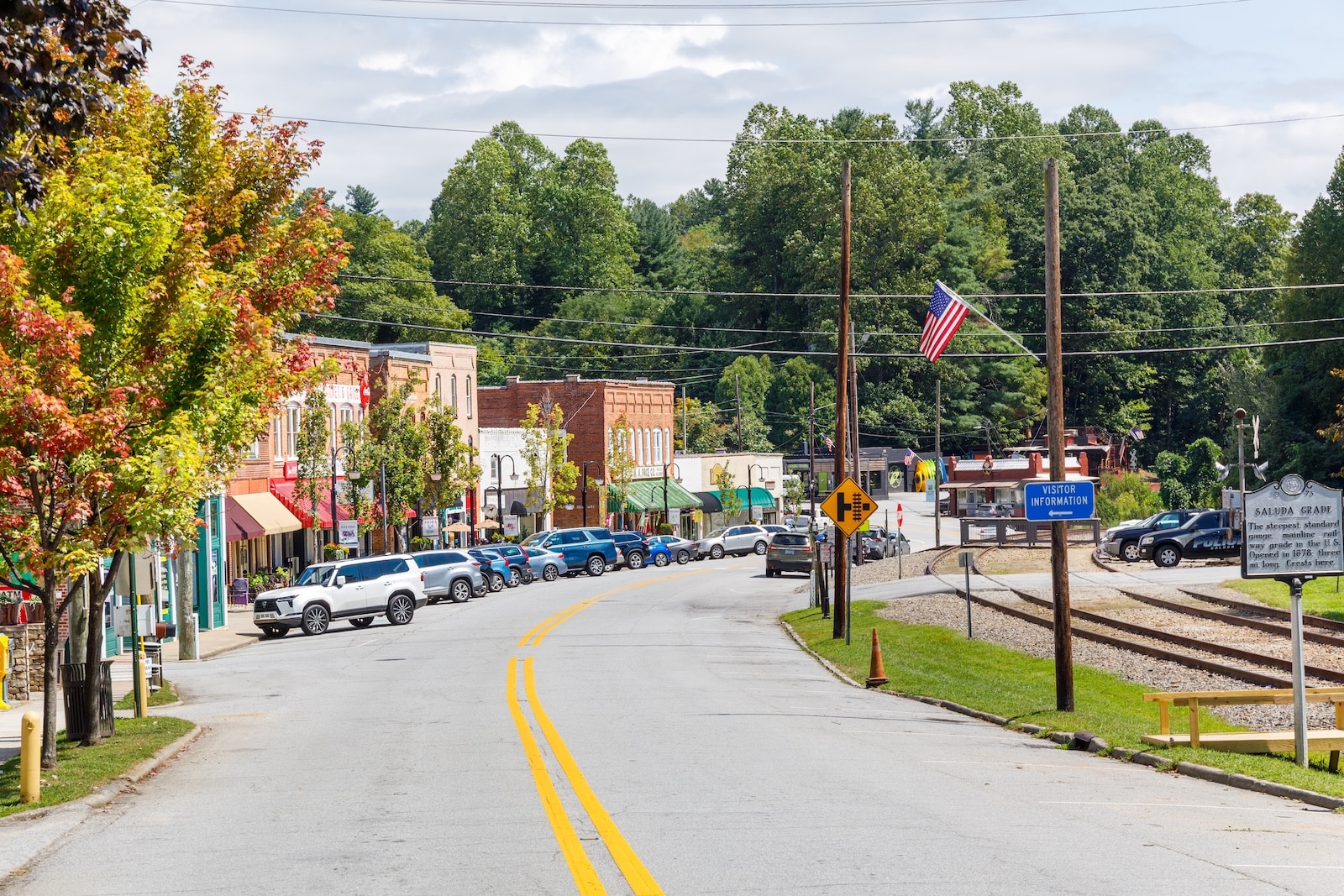
The railroad crests in downtown Saluda along Main Street, where a North Carolina historical marker identifies the site. The historic Saluda Grade railroad is sometimes confused with the steep highway approaches around Saluda and I-26, but the famous grade refers specifically to the railroad.
Trains struggled uphill, often with help from additional locomotives. Coming down was even more dangerous.
How Engineers Solved an Impossible Problem
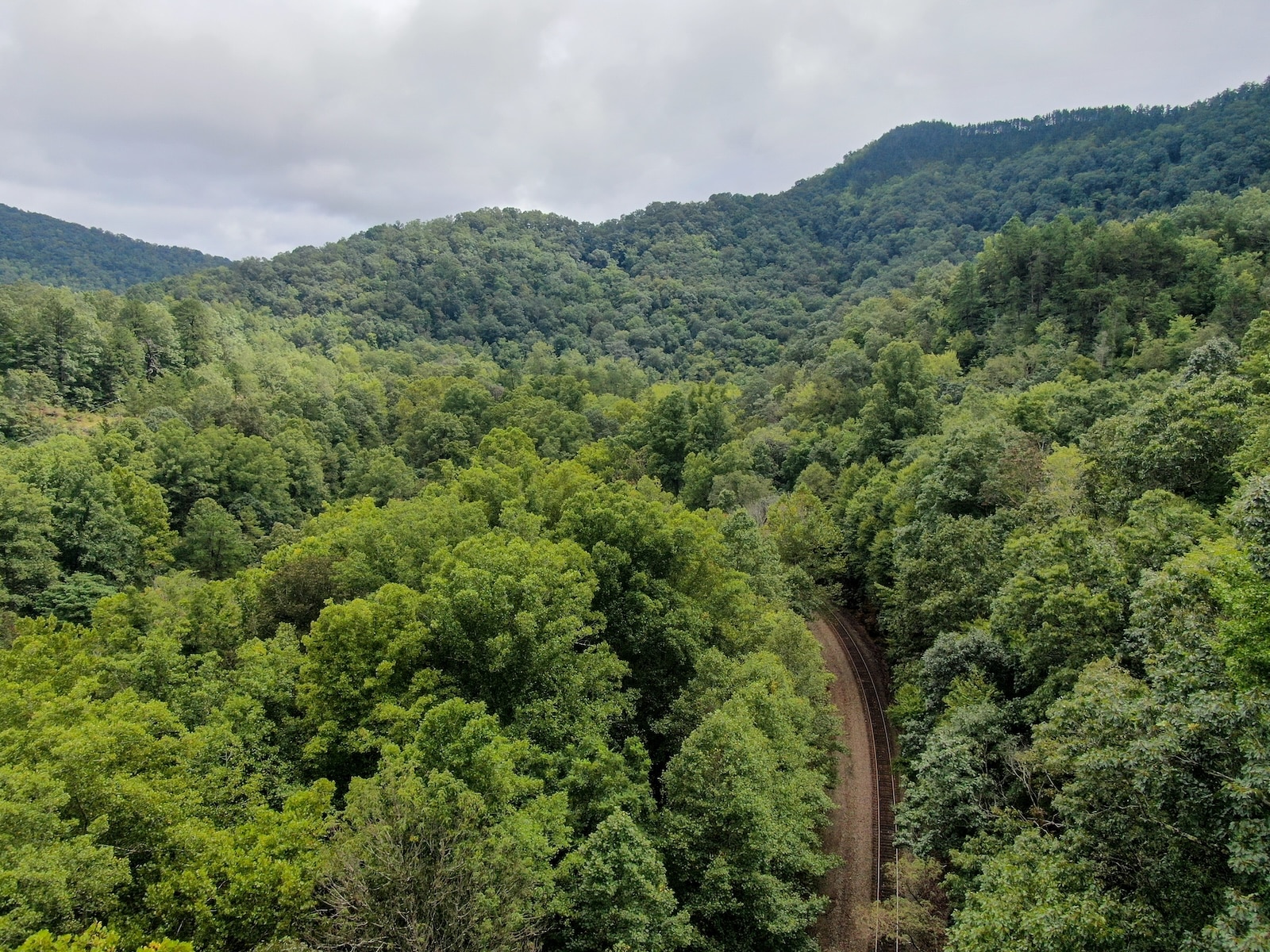
When railroad builders worked to connect the Carolina Piedmont with Western North Carolina in the 1870s, Chief Engineer Charles W. Pearson faced a difficult route through the Blue Ridge Mountains.
A gentler route through Howard’s Gap was rejected because of unstable terrain and underground springs. Pearson instead chose a more direct line following the Pacolet River gorge toward Saluda.
Construction was difficult and dangerous. Convict labor was used extensively on railroad projects in the region during this period, and casualties among workers became serious enough to prompt a legislative investigation.
Despite those conditions, the first train reached Saluda on July 4, 1878.
The railroad changed the community almost immediately. What had been known as Pace’s Gap grew around the new rail line, and Saluda was incorporated just a few years later.
The Runaway Trains That Made Saluda a Legend
Building the Saluda Grade was one challenge. Operating it safely was another.
Heavy trains descending toward Melrose had to fight gravity the entire way, and brake failures could quickly become catastrophic. In 1880 alone, 14 men died on the grade. A runaway train in 1886 killed six convicts, two guards, and a foreman, and three separate crashes occurred during the summer of 1903.
Many derailments happened near Melrose at a section known as Slaughter Pen Cut, which became one of the most notorious locations on the Saluda Grade. The last major accident on the grade occurred in 1964.
Railroads responded with strict operating procedures. Descending trains stopped near the top of the grade for brake inspections and special preparations before heading downhill. Southern Railway also installed two runaway safety tracks in 1903 to help stop trains that had lost control.
Southern Railway later became part of Norfolk Southern, and the Norfolk Southern Saluda Grade remained in service until December 2001, when regular rail operations were suspended.
So, why was the Saluda Grade abandoned? The line was not formally abandoned in the usual sense when trains stopped running. Norfolk Southern simply retired the route as traffic patterns changed and other routes became more practical.
There are currently no plans to reopen the Saluda Grade for regular train service.
Visiting the Saluda Grade Today
You do not need a railroad background to appreciate the Saluda Grade. The line crests right in downtown Saluda, where visitors can see the historic railroad corridor and North Carolina historical marker along Main Street.
The best place to learn more is the Saluda Historic Depot and Museum on West Main Street. The historic Southern Railway depot dates to the early 1900s, although its exact construction date is uncertain. Inside, visitors can see photographs, railroad artifacts, and a scale model that helps explain how the Saluda Grade worked.
Admission is free, and hours vary seasonally, so it is worth checking the depot’s current schedule before visiting.
The railroad corridor is also entering a new chapter. In 2025, the former Norfolk Southern line was purchased for development of the Saluda Grade Trail, a planned multi-use rail trail through parts of North Carolina and South Carolina.
The Saluda Grade rail trail is still being developed in phases, so visitors should check the official project website for current maps, construction updates, and information about which sections are open before planning to walk or bike the route.
A Town Built by the Grade, Including Us
It is easy to see Saluda’s small-town charm today and forget how much of the community grew because of the railroad.
Before the tracks arrived, this area was known as Pace’s Gap, a stopping place for traders and livestock drovers moving through the mountains. The railroad changed that. Saluda became an important stop for train crews and later a popular summer destination for people escaping the heat of the South Carolina Lowcountry.
Hotels, boarding houses, shops, and summer homes followed.
Orchard Inn’s history is part of that same story. Built in 1926 as the Railway Clerks’ Mountain Home, the property served as a summer retreat for Southern Railway clerks and their families during the height of Saluda’s railroad era.
Today, guests at our boutique inn are staying in a building that remains closely tied to the railroad history that shaped this town.
Frequently Asked Questions About the Saluda Grade
What is the Saluda Grade?
The Saluda Grade is a roughly three-mile section of railroad between Melrose and Saluda, North Carolina. It is recognized as the steepest standard-gauge mainline railroad grade in the United States, with an average grade of about 4.7%.
Why is the Saluda Grade so famous?
The Saluda Grade became famous for its unusually steep grade and difficult operating history. Trains required special procedures to travel safely over the mountain, and the grade was also the site of numerous serious runaway accidents.
Is the Saluda Grade still used by trains?
No. Norfolk Southern suspended regular rail operations over the Saluda Grade in December 2001.
How steep is the Saluda Grade compared to other railroads?
The Saluda Grade averages roughly 4.7%, which is exceptionally steep for a mainline railroad. By comparison, even grades of 1% to 2% can significantly affect conventional railroad operations.
Can you visit the Saluda Grade?
Yes. The grade crests in downtown Saluda, and visitors can also stop at the Saluda Historic Depot and Museum to learn more about the railroad’s history.
Is the Saluda Grade being turned into a hiking trail?
Yes. The former rail corridor is being developed as the Saluda Grade Trail, a multi-use rail trail for walking, biking, and other non-motorized recreation. The project is being built in phases, so check current trail information before planning a visit.
Make Saluda Grade Part of Your Stay
The Saluda Grade is one of the best ways to understand how this small mountain town came to be. You can see where the railroad crests downtown, learn the story at the Saluda Historic Depot, and then explore the same Main Street that grew because trains once stopped here.
If you want the full picture of what makes Saluda worth a trip on its own merits, read our guide to why Saluda is one of the best small towns in the Blue Ridge Mountains. For a broader rundown of hikes, waterfalls, and other things to do nearby, check out our complete guide to Saluda, NC. And if you’re planning to explore Main Street on foot, including the shops and galleries just steps from where the grade crests, our downtown walking guide will point you in the right direction.
Then come back to a property that is part of that railroad story. Our Saluda Bed and Breakfast was built in 1926 as the Railway Clerks’ Mountain Home and today offers guest rooms, suites, and private cottages just outside downtown.
Book your stay at Orchard Inn and make the history of the Saluda Grade part of your next visit.